Referrals Are Dying: Why Smart Contractors Go Digital in 2026
Referrals still close at 50-70%. But the volume is dropping. Here's why, what's replacing them, and how to build a system so you're not dependent on them.
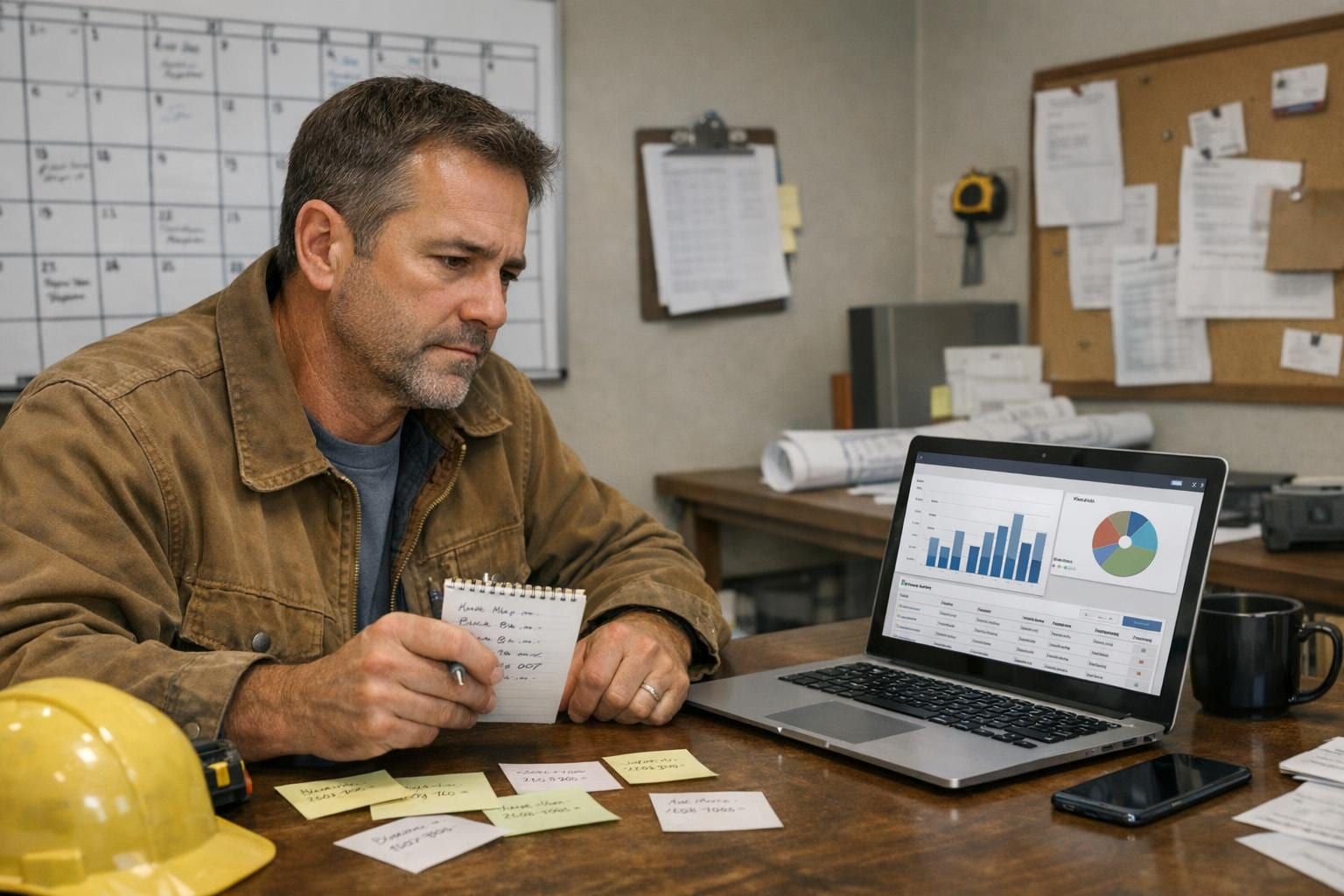
If you've been in business more than 10 years, you remember when your phone just... rang. A neighbor told a friend. A realtor passed your name along. A customer from 3 years ago called because their coworker needed the same work done. You didn't need marketing. You needed a phone and a reputation.
And then, gradually, the ringing slowed down.
Not to zero. You still get referrals. They still close at 50-70%, which is better than any other lead source you'll ever find. But the volume is dropping. Fewer calls per month. Longer gaps between them. More months where you're wondering if the phone is broken.
This isn't a coincidence. It's a trend. And if you don't understand why it's happening, you'll spend the next 5 years watching your revenue slowly decline while your competitor who "went digital" passes you.
Referrals Aren't Dead. They're Shrinking.
Let me be clear: I'm not telling you to stop taking referrals. That would be insane. A referred customer is the best customer in the world — they already trust you, they're pre-sold, and they close at rates that make every marketing channel jealous.
The problem isn't the quality of referrals. It's the quantity. And the quantity is declining for reasons that have nothing to do with how good your work is.
Reason 1: Younger Homeowners Google First
In 2020, the oldest millennials turned 39. In 2026, they're 45. This generation now makes up the largest segment of homebuyers and homeowners needing services. And their first instinct when something breaks isn't to call a neighbor. It's to pull out their phone and search Google.
Studies from 2024-2025 show that 78% of homeowners under 45 search Google before hiring a contractor, compared to 52% of homeowners over 55. The younger homeowner doesn't have a "guy" for everything. They have Google. And the contractor who shows up first on Google gets the call — not the one their neighbor mentioned at a barbecue six months ago.
This isn't a generational criticism. It's a behavior shift. The same way people stopped using the Yellow Pages, they're gradually stopping the "ask a friend" referral chain. It's not intentional. It's just easier to Google it.
Reason 2: Mobile Search Replaced Word-of-Mouth
Think about how referrals used to work. Your customer finishes a $15K project. They love it. Three months later, their coworker mentions they need the same work done. Your customer says "Oh, you should call [your company]." The coworker writes down the name and calls you that evening.
Here's how it works now. Same scenario. Coworker hears your name. They pull out their phone. They don't call you. They Google you. Or more accurately, they Google "[your service] near me" and check whether you show up. If you do, great — the referral converts. If you don't, they see 3 other companies first. Companies with 200 reviews, professional websites, and before-and-after photos. Your referral just got intercepted by a Google search.
Even when someone is referred to you, they verify on Google before they call. 87% of consumers read online reviews before choosing a local business, even when they've been personally referred. If your Google presence is weak — few reviews, no website, or a website from 2019 — the referral bounces to your competitor with the stronger online profile.
Reason 3: Online Reviews Are the New Referrals
Think about what a referral actually is: a trusted person telling you that a business is good. Now think about what a Google review is: a verified customer telling you that a business is good. To the homeowner reading it, 200 Google reviews from strangers carry the same — and sometimes more — weight than one personal recommendation.
This is the critical shift. Trust used to flow through personal networks. Now it flows through review platforms. The contractor with 280 five-star Google reviews gets the "referred" trust without any actual referrals. They've built a permanent, visible trust engine that works 24/7 while your word-of-mouth network works only when someone happens to bring your name up in conversation.
A BrightLocal survey from 2025 found that 76% of consumers trust online reviews as much as personal recommendations from friends and family. For homeowners under 40, that number is 84%. Your reviews are your referrals now. If you don't have enough of them, you're invisible.
Reason 4: People Move, Networks Thin
Americans are moving more than ever. Your best customers who referred you 3 times in 5 years? They moved to another state. Their neighbors moved too. The tight-knit community where everyone knew "the guy" for everything is loosening. New homeowners in the neighborhood don't know anyone yet. Their first resource isn't the neighbor. It's Google.
In rural and suburban markets where referrals traditionally dominated, this effect is slower but still present. Newer residents dilute the existing referral networks. Every year, a larger percentage of homeowners in your area have no local connections to draw from. They'll rely entirely on search to find a contractor.
The Numbers Tell the Story
Let's look at the data across the contractors we work with:
- Average referral volume in 2020: 8-12 referral leads per month for an established contractor
- Average referral volume in 2025: 4-7 referral leads per month for the same contractor
- Average Google lead volume in 2020: 3-5 per month (for those with any online presence)
- Average Google lead volume in 2025: 15-35 per month (for those with a real system)
The referral decline is gradual — maybe 10-15% per year. It doesn't feel dramatic in any single month. But over 5 years, your referral pipeline has lost 40-50% of its volume. Meanwhile, the contractors who invested in digital are seeing 3-5x more leads from Google than they ever got from referrals. And those Google leads, when the system is built right, close at 25-40% — not as high as referrals, but at 5x the volume. The revenue math is overwhelming.
Not "Stop Referrals." Add a System.
Let me say this again because it's important: referrals are still your highest-quality leads. Don't stop doing great work. Don't stop asking for recommendations. Don't stop thanking customers who send people your way.
But stop depending on them.
Depending on referrals means you can't predict your revenue. You can't plan your hiring. You can't invest in equipment. You can't even take a vacation without worrying that the phone will stop ringing while you're gone. That's not a business. That's a high-stakes hope machine.
A digital lead generation system gives you what referrals never could: predictability. You know that X dollars in Google Ads produces Y leads, which produces Z jobs, which produces $W in revenue. Every month. Regardless of whether anyone mentions your name at a barbecue.
What "Going Digital" Actually Means for a Contractor
It doesn't mean becoming an Instagram influencer. It doesn't mean dancing on TikTok. It doesn't mean "building a brand" through social media. None of that works reliably for local service contractors.
Going digital for a contractor means three things:
1. Showing Up When People Search
90% of home service purchases start with a Google search. If you're not on page 1 — either through Google Ads, the Map Pack, or organic results — you don't exist for those homeowners. This is the replacement for word-of-mouth. It's not sexy. It's just where the customers are.
What this requires: a website with pages targeting your services and service areas. A fully optimized Google Business Profile with 100+ reviews. Google Ads targeting high-intent keywords for your highest-value services.
2. Building a Review Engine That Works Without You
Your reviews are your new referrals. They need to grow consistently — 8-15 new reviews per month minimum. Not because you personally ask after every job (that works 10% of the time). Because you have an automated system — a text message sent the day after the job — that converts at 30-40%.
Within 6-12 months of running a review automation system, most contractors go from 30-50 reviews to 150-250+. That review count does the same job your referral network used to do, except it works for every homeowner who searches for you, not just the ones who happen to know someone who hired you.
3. Tracking Everything to the Job
The biggest advantage digital has over referrals: you can track it. You can see that your "roof replacement [city]" Google Ad produced 8 calls last month, 3 of which became signed $14K contracts. You can see that your SEO produces 40% of your leads at $0 per click. You can make decisions based on data instead of gut feeling.
Referrals are great, but you can't optimize them. You can't say "let's spend 20% more on referrals this quarter." Digital gives you that lever. More spend = more leads = more jobs, with every dollar tracked.
How to Start (Without Abandoning What Works)
You don't need to go from 100% referrals to 100% digital overnight. Here's the transition that works for most contractors:
Month 1: Fix Your Google Presence
Google Business Profile: complete it. Every field. Every service. 20+ photos. Start texting review links to customers. Cost: $0. This alone starts capturing the "referred but Googled you first" traffic that's currently bouncing to your competitors.
Month 2: Get a Website That Works
Not a brochure. A lead generation tool with pages for every service and every city you serve. Mobile-first. Phone number on every page. Reviews displayed prominently. Cost: $2,000-$5,000 one-time.
Month 3: Turn On Google Ads
Target your highest-value services. Dedicated landing pages. Negative keywords from day one. Call tracking on everything. Budget: $1,500-$3,000/month. This is where the predictable pipeline starts.
Months 4-12: Let SEO Compound
The website content you built starts ranking. Organic leads supplement paid leads. Your cost per lead drops every month. By month 12, 40-60% of your leads may come from organic search at $0 per click. That's the compounding effect that referrals could never offer.
Through this entire transition, referrals keep coming. They're just no longer your only pipeline. They're one source among three or four, and probably still your highest-closing source. The difference is that when referrals have a slow month, you don't panic. The system keeps producing.
The Contractors Who Wait Will Be Left Behind
This isn't a prediction. It's already happening. In every market we work in, we see the same pattern: the contractor who invested in digital 2-3 years ago now dominates local search. They have 200+ reviews, 50+ ranking pages, and a pipeline that produces 20-40 leads per month. The contractor who's still "thinking about it" has the same 30 reviews from 2022 and the same 5-page website.
The gap between these two companies widens every month. Digital marketing compounds. The company with 50 pages and 200 reviews is pulling further ahead while the company with nothing is falling further behind. Waiting doesn't keep you in the same place. It puts you deeper in the hole.
Referrals got you here. They won't get you to the next level. Not because they're bad — because there simply won't be enough of them. The smart move is to add a predictable system while referrals are still flowing, not scramble to build one when they've dried up.
If you want to see what a full digital system would look like for your trade, start with our contractor SEO guide or check out the marketing system that's produced $112K+ for contractors like you. Takes 2 minutes to apply. We'll tell you if it makes sense for your business within 24 hours.
Your referral network built your business. Your digital system will grow it. Time to build both.