How to Get Septic Customers Without Depending on Word-of-Mouth
Referrals dry up without warning. Here are the channels septic companies actually use to book $3K-$15K jobs consistently without waiting for the phone to ring.
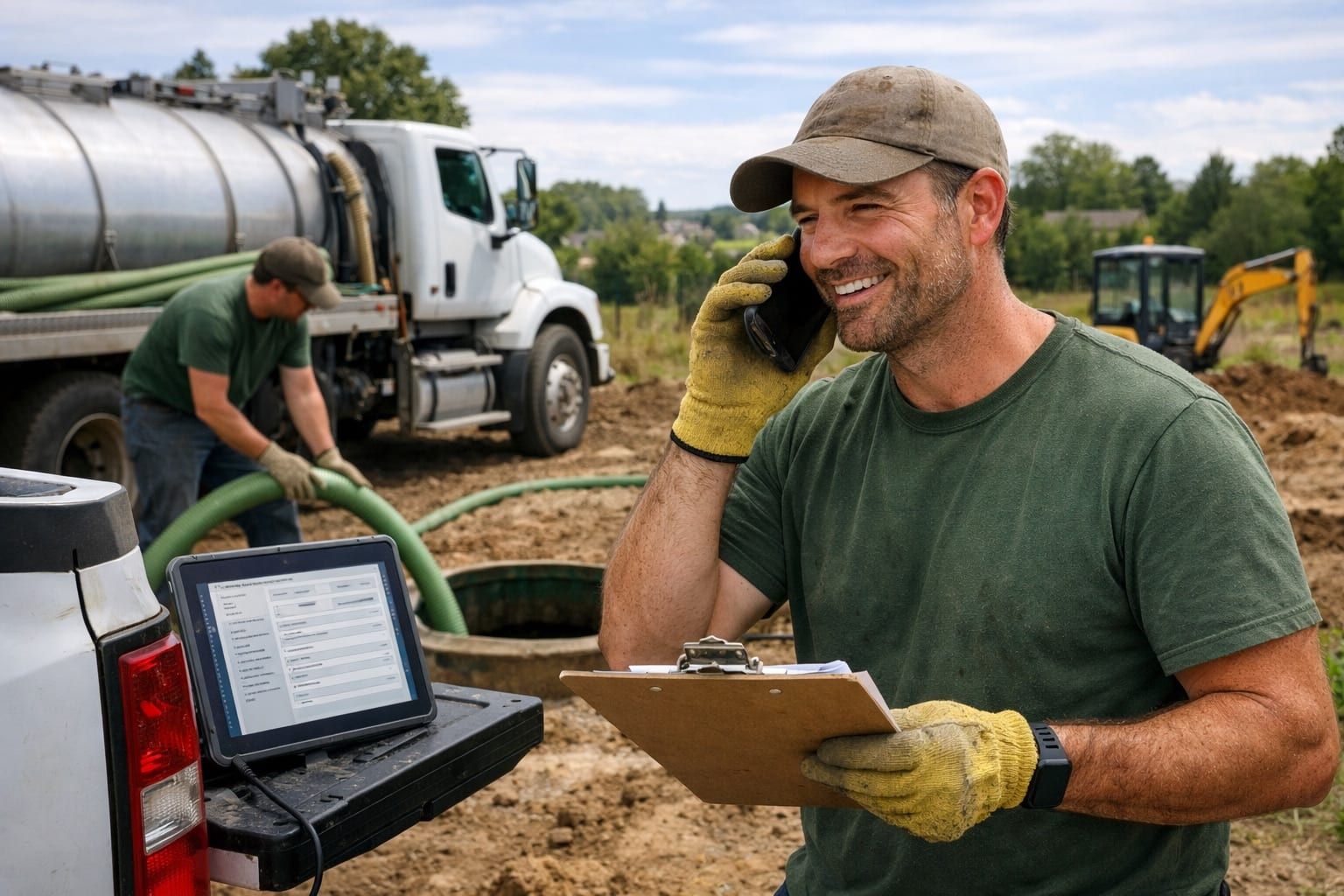
You built your septic business on referrals. Somebody's system backs up, they call a neighbor, the neighbor says "call these guys," and you get the job. That cycle worked for years. Maybe decades.
Then one quarter, the phone stops ringing. Not completely. Just enough to notice. One slow week turns into a slow month. Your crew sits around. You start wondering if you should run a Craigslist ad or finally "do something with Facebook."
Here's the reality: referrals are the best kind of lead. But they're also the least reliable. You can't control when someone's drain field fails, and you definitely can't control whether your past customer remembers your name when their coworker asks for a recommendation. Referrals are gravy. You need a main course.
Why Referrals Alone Stop Working
The math is straightforward. A typical septic company gets maybe 5-10 referral leads per month in a good stretch. Some months it's 2. Some months it's zero. You can't hire based on that. You can't plan based on that. And you sure can't grow based on that.
Meanwhile, every month in your service area, hundreds of homeowners are typing things into Google:
- "septic pumping near me" - someone who needs routine service now
- "septic system backing up" - an emergency worth $800-$3,000
- "septic system replacement cost" - a $8K-$15K installation lead
- "septic inspection for home sale" - a quick job that often leads to a repair
If you're not showing up for those searches, someone else is getting every single one of those calls. That's not theoretical. That's what's happening today.
The Three Channels That Actually Work for Septic
1. Google Maps (Local Pack)
When a homeowner searches "septic repair near me," Google shows three local businesses before anything else. That three-pack gets roughly 44% of all clicks. If you're in it, you're getting calls. If you're not, you're invisible to almost half the people searching.
Getting into the local pack isn't magic. It's your Google Business Profile: complete info, consistent posting, photos of your actual work, and most importantly, reviews. A septic company with 80+ reviews and a 4.7 rating will beat a company with 12 reviews and a 4.9 every single time. Volume matters more than perfection.
2. Google Ads (Pay-Per-Click)
Paid search puts you at the top of Google immediately. No waiting for SEO to kick in. For septic, the right campaigns target high-intent keywords like "septic tank repair," "emergency septic service," and "septic system installation" in your specific counties. A well-run campaign can produce leads for $45-$120 each. When those leads turn into $3K-$15K jobs, the ROI is hard to argue with.
The key phrase there is "well-run." Most septic companies who try Google Ads on their own waste money on broad terms that attract people looking for DIY advice or researching how septic tanks work. Those clicks cost you $8-$15 each and produce nothing.
3. SEO (Organic Rankings)
Organic results sit below the ads and the map pack. They take longer to earn, but they're free once you have them. A septic company that ranks on page 1 for 20-30 service-area keywords can pull in 15-25 organic leads per month without spending a dime on ads.
The trick is that most septic websites are five-page brochures. A homepage, an about page, a services page, a gallery, and a contact page. Google has nothing to rank. You need pages for every service you offer in every area you serve. "Septic repair in [County]." "Septic installation in [Town]." That's how you show up where it matters.
What a Real Lead Pipeline Looks Like
The septic companies that grow predictably aren't relying on one channel. They've got Google Maps bringing in 8-12 calls per month. Paid ads adding another 10-15. Organic search pulling in 10-20 more. That's 30-45+ leads per month, every month, regardless of whether anyone remembers to recommend them.
Referrals still come in on top of that. But they're a bonus, not the business plan.
Where to Start
If you're currently running on referrals alone, don't try to build all three channels at once. Start with the one that gets you results fastest:
- If you need leads this week: Google Ads. You can be running within days.
- If you need steady leads within 60-90 days: Google Maps optimization + review generation.
- If you want long-term, free lead flow: SEO with location-specific content.
Or, if you want all three built and managed so you can focus on what you're actually good at, that's exactly what a septic marketing system is built to do. We build the whole pipeline, track every call to the source, and guarantee it produces jobs. Not leads. Jobs.
The homeowners in your area are searching right now. The only question is whether they're finding you or the guy down the road. If you want to stop guessing and start seeing where your next job is coming from, take a look at how we work with septic companies.