7 Things the Best Roofing Websites Do That Yours Probably Doesn't
7 things the best roofing websites do that yours probably does not. Real examples and data on what converts visitors into booked jobs.
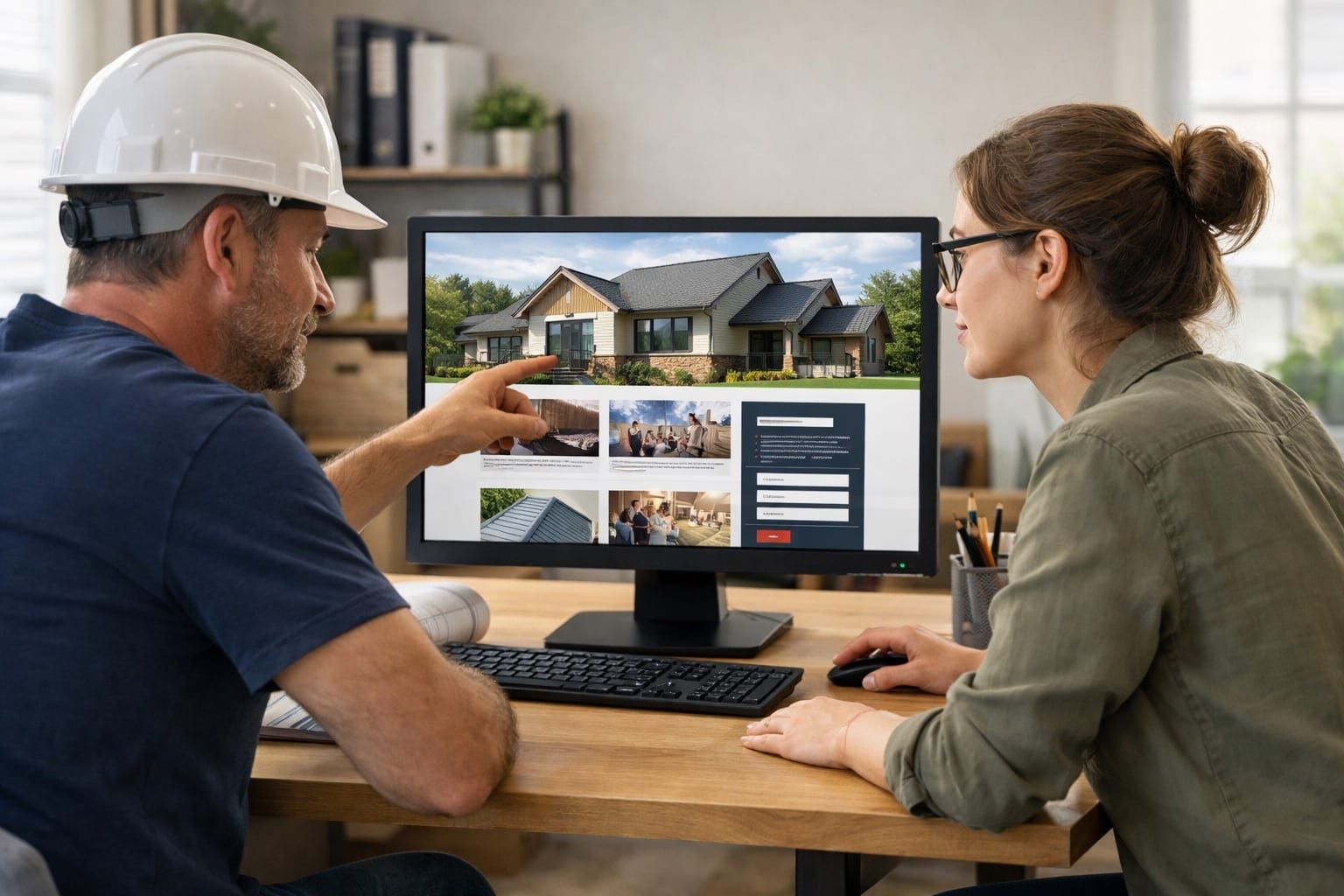
Your website is either your hardest-working salesperson or a digital business card that's been collecting dust since 2021. There's no in-between. And for roofing companies, where the average job is $8K-$25K, the stakes are too high for a website that just "looks nice."
We've analyzed hundreds of roofing websites across every major market. The ones that generate 20-40 leads per month all share the same 7 characteristics. The ones that generate 2-3 leads per month are usually missing most of them.
1. They Load in Under 3 Seconds
53% of mobile visitors leave a site that takes longer than 3 seconds to load. The average roofing website loads in 6-8 seconds. That means more than half of the people who click on your site -- people who were looking for a roofer -- leave before they see a single word.
Speed isn't a nice-to-have. It's the foundation. If your site is slow, nothing else matters. No amount of good copy or pretty design will save a website that visitors never actually see. Google also uses page speed as a ranking factor, so a slow site hurts your SEO too. Double penalty.
2. They Put Social Proof Above the Fold
The best roofing websites don't lead with "Welcome to ABC Roofing." They lead with proof. "247 five-star reviews." "Licensed and insured since 2009." "Over 1,200 roofs installed." A homeowner who lands on your site is making a snap judgment in 3-5 seconds. If the first thing they see builds trust, they scroll. If it doesn't, they bounce.
Review counts, years in business, Google rating, and license numbers should all be visible without scrolling. This isn't bragging. It's answering the only question the visitor has: "Can I trust this company with a $15K decision?"
3. They Have Dedicated Pages for Every Service
A single "Services" page that lists roof repair, replacement, commercial, gutters, and siding in a bulleted list is doing nothing for your rankings. Google wants to see depth. A dedicated page for "Roof Replacement" with 800+ words of real content, before-and-after photos, pricing context, and a clear CTA will outrank a bullet point on a services page every single time.
The math is simple: more pages targeting more keywords equals more chances to rank. Top roofing websites have 40-80+ indexed pages. If yours has 5-10, you're bringing a pocket knife to a gunfight.
4. They Have Location Pages for Every City They Serve
This is the single most underused tactic in roofing web design. If you serve 20 cities, you need 20 dedicated location pages. "Roof Repair in [City]" with localized content, service area details, and local phone numbers. These pages are lead machines for "near me" and city-specific searches.
We build 200-300 location pages for roofing clients. Each one is a net in the water catching leads you'd otherwise miss. A roofer in Charlotte who also serves Huntersville, Concord, and Gastonia should have separate pages for each -- not a footer that says "Serving the greater Charlotte area."
5. They Make the Phone Number Impossible to Miss
This sounds obvious. It's not. Go look at your website on a phone right now. Can you see the phone number without scrolling? Is it clickable? Does it show up on every page, or just the contact page?
The best roofing websites have a sticky header with a click-to-call phone number that follows the visitor down every page. They also have the number in the hero section, in the middle of the page, and in the footer. Redundancy isn't bad design here. It's conversion optimization. Every extra second a visitor spends looking for your phone number is a second closer to them hitting the back button.
6. They Use Real Photos, Not Stock Images
Homeowners can smell a stock photo from a mile away. The generic image of a smiling family in front of a perfect house doesn't build trust. It actually erodes it. It tells the visitor you don't have real work to show.
The roofing websites that convert best feature real before-and-after photos, real crew photos, and real project galleries. They're not professionally staged magazine shots. They're iPhone photos of your crew on a job site, a completed tear-off, a clean install. Authentic beats polished every time in this industry. Homeowners want to see that you do the work, not that you hired a photographer.
7. They Have Clear, Singular Calls-to-Action
The worst thing a roofing website can do is give visitors too many options. "Request a Quote." "Download Our Free Guide." "Follow Us on Facebook." "Read Our Blog." "Check Out Our Financing Options." When you give someone 7 things to click, they click nothing.
Top-converting roofing sites have one primary CTA per page: call or fill out a form. That's it. Everything else is a distraction. The goal is a phone call or a form submission. Period. Every element on the page should push toward that one action.
The Real Cost of a Bad Roofing Website
Let's say you're getting 500 visitors per month from Google (organic + ads combined). With a typical roofing website converting at 2-3%, that's 10-15 leads. A well-built site converting at 7-10% turns those same 500 visitors into 35-50 leads. That's 20-35 extra leads per month from the same traffic you're already paying for.
At a $14K average job value and a 30% close rate, those extra leads are worth $84K-$147K per month. Your website isn't a brochure. It's a revenue-generating asset, and a roofing website built to convert pays for itself in the first month.
If your site is more than 3 years old, loads slowly, or doesn't produce at least 15-20 leads per month, it's not just "due for an update." It's actively costing you money. Every month you wait is another month of leads going to your competitor's better-built roofing website.